Thursday, 19 May 2011

Work Experience - Day 4 (Royal Wedding Street Parties photography assignment)

On Friday, the day of the Royal Wedding, I was sent out on my own to photograph some of the street parties that were happening around the city. The first location I was assigned to photograph was Bridgemead Nursing Home, where they were holding a party from 12 – 4pm to celebrate the wedding. However, seeing as most of the residents were over 80 years old, by the time I got there in the early afternoon they had gotten so fatigued from the excitement that they had all gone to bed! Fortunately, five residents had just woken up when I arrived so I was able to set up a shot with them standing next to a wedding dress and photo display made for the occasion, seen below. This photo was published in the newspaper in the section titled 'How Bath Celebrated the Royal Wedding' on page 45.


The second street party I was sent to was one in Sydney Buildings, where they had closed off the street and decorated it with layer upon layer of bunting, balloons and wedding and union jack paraphernalia. I had to weave my way around the residents dressed in their finest wedding clothes to try to find the main organisers and explain who I was to get permission to take photos. I then scouted out the people dressed most conspicuously in wedding finery and asked a group of them to pose together, along with a dog that was also dressed for the occasion. I found out later that someone had come in to the office to ask if he could buy the photograph after seeing it in that week’s paper, seen below:

I enjoyed this day since it was the first one where I was sent out on assignment on my own. I found having to walk into a party or an establishment and explain who I was boosted my confidence, getting easier each time. I also had to walk up to complete strangers, explain who I was and ask them to pose for the camera, setting up the composition and formation of the group to best show the event. This was challenging at first, but again became easier the more I did it.

In retrospect, I think I probably should have invested in better camera equipment before going out as a representative of the Chronicle. I was using my own DSLR, lens and hotshoe flash which are all good quality, but had a homemade diffuser taped on made from packing material which did the job but didn't look the most professional or what you would expect a photographer from the city's largest newspaper to have. One person commented on this and made me realise that, although I did look before the placement to try to find a diffuser to fit and couldn't, perhaps I should have invested in a higher-quality flash that would have come with its own professional diffuser. I've learned from this that equipment and accessories such as a large camera bag are essential, as I had to improvise to find a way to carry all my equipment.

Bath Chronicle - Day Three (photography)

The third day I was sent out on assignment with one of the main photographers for the day. As this was the day before the Royal Wedding, the day was packed with appointments of various primary schools and nurseries having street parties and competitions. We had 13 different photo ops to get to and spent most of the day driving to the different locations and trying to organise children in their wedding costumes to try and get them all into one shot.

I learned a few tips along the way, such as the fact that local newspapers generally want “strong, tight compositions with bright smiles” according to photographer Lloyd Ellington. He also told me some tips about writing the captions for the photographs, saying the main elements you need to get across are ‘who, what, where and why’. The main thing needed, he explained, is to be able to capture a photograph that tells the entire story in one image to draw the readers in. In the words of photojournalist Mark Hancock (1996), “an image has no age, language or intelligence limits."

He also said that a photo has to be able to tell the story on its own as much as possible. This echoes research in photojournalism that indicates that "pictures that explain elements of the text improve both comprehension and recall, while pictures that simply adorn the text do not improve comprehension or recall, and may even diminish them" (Garry et al., 2007, p. 996)

Here are some examples of some of the photos I took out on assignment:


This last photo was unplanned; we happened to see a house completely done up with union jack flags, streamers, bunting and even a union jack welcome mat so we decided to improvise. We went up to the house and knocked on the door, and luckily the owner of the house was happy to come out, also decked out in his England gear (including a union jack inflatable hat), and pose for some photos. This was a great opportunity since it showed that as a photographer, you can't just stick by the schedule but have to be ready to catch any opportunity that presents itself to you.

I thoroughly enjoyed this day, since it consisted a lot more of getting out and about, meeting new people and seeing more of the city. I found that even though this day should have been more tiring than the ones I spent sitting at the news desk talking on the phone or typing on the computer, I felt much more energetic and less drained at the end of the day. In this respect I preferred working in the photography department to the writing department, though I found challenges in both.

One of the challenges I found in doing the photography was that they generally wanted set up, posed shots with tight compositions and big grins. As my interest in photography is more in capturing what photojournalist Mark Hancock calls “the verb” or action moments of a story, this stretched my abilities as a photographer to learn to set up these compositions in a way that would fit with the brand identity of the newspaper; again, fitting with their style rather than my own. This is an important quality to learn working commercially for a publication, as from what I've seen, the most important thing is to fit to the publication's style and brand identity.

References:

Garry, Maryanne , Strange, Deryn , Bernstein, Daniel M. and Kinzett, Toni (2007) Photographs Can Distort Memory for the News. Applied Cognitive Psychology 21, pp. 995-1004.

Hancock, Mark M. (1996) What Is a Photojournalist? — http://markhancock.blogspot.com/1996/01/what-is-photojournalist.html accessed 8 May 2011

Bath Chronicle - Deadline Day, week one

The second day of my placement at the Bath Chronicle was deadline day, as the newspaper comes out weekly on a Thursday. The same editors had another meeting in the morning that I attended with the final ‘newslist’ copy. They finalised which stories were going on which pages and sorted out the front page by changing the main lead to another story that had fortunately come up that day. This was interesting to see as it showed how the newspaper handled the ethics of reporting.

After the meeting, I went out with a reporter who was going to interview the main subjects of the front-page story. On the way, I was able to ask her some questions about how she had gotten her job at the Chronicle. Having had the job for three years now, she said she had to do a journalism course after her degree and take exams in law, governmental organisation and shorthand writing in order to pass. She did a work placement at the Chronicle near the end of her course and found out there was a job opening, so she applied for it and got the job soon after. This was encouraging to hear since it showed the importance of getting a work placement, as doing one and gaining contacts through it was the reason she eventually got the job.

After seeing the reporting in action, I then spent the rest of the day sitting with the deputy editors and seeing first-hand what they do to get the newspaper ready for publication. The editing process was exhaustive, even brutal, changing the style and writing of each piece to fit in with the brand identity of the newspaper.

For example, this is the finished version of the first article I wrote about mouse racing (compare it to the original in my last post!), taken from Bath Chronicle's website:

Mouse racing returns - and you should see the jockeys! (this was the actual headline.)

When you're placing a bet, it can be wise to start small.

And that's what you can do at a mouse-racing night in Bath this weekend.

The event at Larkhall Athletic's Plain Ham ground this Sunday at 6pm is part of the Larkhall Festival, and represents the revival of a 20-year tradition.

The club, for which the event is a fundraiser, is abiding by RSPCA animal racing guidelines.

The mice will be separated into six different tracks with a starting point and a finishing line.

The doors of each track will be opened simultaneously, with mouse bedding infused with the scent of food at the end of the race as a lure.

The majority of the mice used in the race will be rescue animals or borrowed from city pet shops.

Races can be sponsored for £25 on a first come, first served basis, while mice can be sponsored or entered into the race for £5.

Esther Moore


---------------------------------------------------------------------------------------

As can be seen, my piece was changed almost unrecognisably from the original version to fit in with the style and brand identity of the newspaper. I realised from watching this process of editing that my style of writing is completely different from the style of a small-town local newspaper and perhaps I should have done more preparing. In retrospect I can see that I should have bought the newspaper every week in the ones leading up to the placement to get an idea of the style and brand identity of that specific paper and perhaps even practice writing in their style rather than my own.

Reflecting on the differences, I can see that my style of writing was influenced by a number of factors. Since I grew up in Jerusalem, Israel, where world-shaking events would happen every day that would make front-page headlines around the world, this instilled in me a desire to write in a way to reflect this. I also tend to read publications that focus more on world events and current affairs and I'm sure that this has influenced my writing style as well.

The Bath Chronicle, on the other hand, is a very targeted local city (what some would call a ‘small-town’) paper and has a specific way of relating to its readers. For example, as can be seen from the example above, they use humour and puns in ways that don’t fit the writing style that I am used to and this took some time to readjust to. However, it was good in the way that it provided a challenge of writing to fit to the publication's style rather than my own, an important skill to acquire in this industry.

Some of the tips I got for writing for this type of publication from shadowing the editor were:
  • Need to keep it simple, one line paragraphs
  • Don't use formal language or slang, but 'everyday speak' to better relate to the readers
  • Short, to-the-point sentences, no frills
  • Drop details and information into the article subtly; ie 'the 31-year old...' rather than taking up a whole sentence to explain 'he is 31 years old'
  • Don't start an article with a name unless it is well-known, or a location that will only make it interesting to certain people connected to it. Need to hook people in, make sure it will be relevant and interesting no matter what the reader's background
  • Quotes: can change the tense, clean it up, etc, as long as you don't twist their words to change the meaning
  • Try to get full quotes (need to learn shorthand for this!)
  • Numbers: spell out number one to ten; anything above use numbers
  • Need to double-check every fact
  • Cross-referencing: add tagline at end of story referencing related article(s).
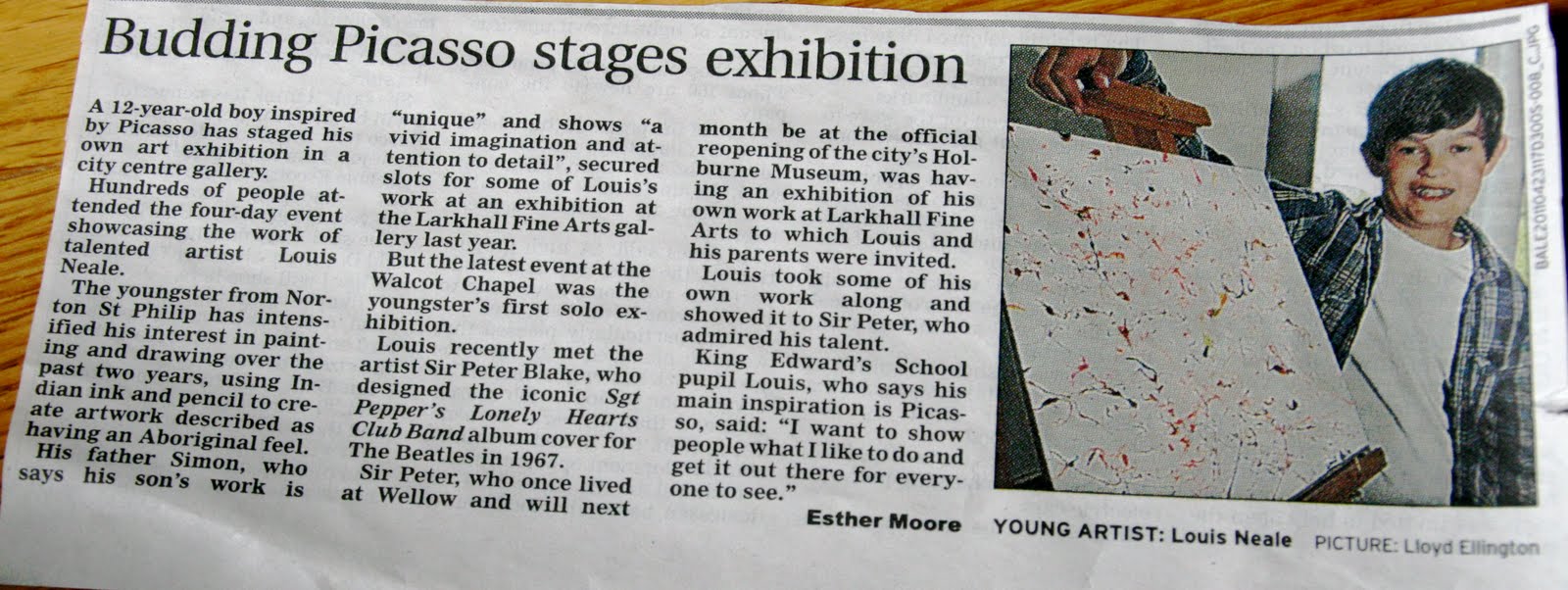
On another note, all three articles I wrote got published! Clippings of the articles are shown below.


Work Experience - The Bath Chronicle, Day One. Mouse Racing, Abandoned Bunnies and a 12-year-old Picasso


Over Easter, I spent two weeks doing a work placement with The Bath Chronicle, the city's biggest newspaper. As my long-term goal is to go into a career of photojournalism, this was a perfect place to experience how it would be to work as a photojournalist in a professional environment. Splitting my time there between the news desk and the photography department, I was able to gain experience in the expectations of working for a publication that circulates to over 100,000 readers. I thoroughly enjoyed my time there, even though it was completely different to anything I've ever done before and presented many challenges I learned a lot from.

On the first day, I was assigned to the news desk and given three stories to research. A large section of this involved having to formulate questions based on the email sent in by the contact and research, followed by interviewing them about the piece over the telephone.

I then wrote the articles to be published in that week’s paper. Although the articles weren’t about the most glamorous of subjects (mouse racing, abandoned rabbits and a 12-year-old artist to be exact), they were a good place to start and I enjoyed the process of writing the articles.

The first article I was given was about the revival of a local tradition...mouse racing. I was given a printout of an email sent notifying the Chronicle of it happening to read the background information, from which I had to come up with a list of questions to ask the contact over the phone. I wrote down the basic information in bullet points, such as the fact that mouse racing used to be an annual event hosted by Larkhall Sports Club and is now being brought back by popular demand, apparently. I also wrote down that they had an animal behaviour expert to come in to design the track, they were raising money for the Community Sports Club and were looking for sponsors to come in and fund the races, most of which would be run by rescue mice. I then came up with this list of questions:

  • How many years did this tradition take place in the past?
  • What year did it begin?
  • Why did the event stop happening?
  • How did it begin, who had the first idea to introduce mouse racing?
  • Why mice and not a different animal?
  • Name and credentials of animal behaviour expert?
  • What exactly are rescue mice?
  • What will the funds specifically go to in the development of the Community Sports Club?
  • How many sponsors are you expecting to enter?
  • Can you outline the process of the mouse race, how they are identified and what is used to lure them to the finish line?
I then phoned the contact, the Commercial Manager or Larkhall Athletic, and asked her the questions on my list, typing as she was talking to try and get all the information down.

I then wrote the article, original of which is shown below:

Mouse Racing Event Back by Popular Demand


Festival-goers who plan on attending the Larkhall Festival this coming weekend may get a chance to see the return of a popular local pastime - mouse racing.

This Sunday evening at 6:00 PM, the race which used to be a popular annual event at the Larkhall Sports Club will occur at the Larkhall Athletic Plain Ham Ground on Charlcombe Lane as part of the Larkhall Festival.

The annual Mouse Race at Larkhall Sports Club had been happening for about 20 to 30 years in the recent past, ending a few years ago with the retirement of the event’s main organisers. Many residents remember the annual races however as a time for the community to gather and view an event that both children and adults could enjoy.

Although mouse racing has faced criticism in the past from animal rights groups such as the RSPCA, the organisers of the race at Larkhall Athletic have made sure the race is within the regulations and fits the process outlined in RSPCA animal racing guidelines. The organisers of the event have commissioned the building of a new track, pictured, by animal behaviour expert Ruth Osborne, holder of a Master’s Degree in the subject from Southampton University.

The mice will be separated into 6 different tracks with a starting line and finishing line. The doors of each track will be opened simultaneously, with mouse bedding infused with the scent of food at the end of the race as a lure to get the mice to the finishing line.

The majority of the mice used in the race will be unwanted rescue mice taken from rescue centres in the local area or mice borrowed from local pet shops, and there is an opportunity for residents to enter their own pet mice to the competition.

Mice can be sponsored or entered into the race for £5 and have a chance to win a £10 cheese voucher from Goodies Delicatessen as the 1st prize.

For those in the crowds who cannot wait to win the cheese as a prize, there will be ploughman’s platters available and a full bar service to toast the winners.

While there will be opportunities to give to local animal shelters or charities at the event, the main proceeds will go towards the development of the Community Sports Club for local Larkhall residents. A non-profit organisation run entirely by volunteers, Larkhall Athletic Community Sports Club currently has 15 youth teams, 4 adult male teams and a ladies team that meet regularly and need a place to be able to gather in the local community.

Races can be sponsored for £25 on a first come, first serve basis. Race sponsors will be able to name one of the six races, feature in publicity of the event and present the prize to the winning mouse sponsor.

-----------------------------------------------------------------------------------------------

After doing a similar process for the other two articles I was given and sending them to the editor, I then sat in on the Tuesday afternoon meeting between the editor-in-chief, the chief sub-editor and the deputy editor to discuss that week’s stories, leads and front page. In this meeting, I was able to see the inner workings of how a weekly newspaper is produced. They discussed the layout of the paper, the importance of each story in relation to placement and some of the legal issues of confidentiality vs. public interest that their current front-page story was creating.

This was interesting as it allowed me to see the process of creating a weekly, local paper and the issues that the editors face in publishing stories. They gave me a copy of the first draft of the newslist, a paper that had all the stories being written for that week's edition. They also gave me an additional paper that had the 'LIVE' stories written on it, the most newsworthy ones that they decided would be going in the first eight pages.

I enjoyed the first day, as even though I was thrown in the deep end so to speak, the experience of having to write articles on the first day to a deadline gave me the confidence to do more of the same to a higher standard for the rest of my time there.
Friday, 8 April 2011

Media Event - SUCCESS

We did it!

The media event happened today and was, in my opinion, a success. I walked around with one of the groups and, while it took some time and effort to get them to warm up and be friendly, it seemed like overall they enjoyed the activities, found it a fun atmosphere and positively responded throughout the day. I took photos throughout the day of the different activities, speakers and graduation ceremony, helped Lee print out all the graduation certificates and gave the main reception the schedule of the event in the morning along with all the rooms and mine and Chloe's phone numbers in case people from the media did show up - which they did, as we got a reporter/photographer from the Bath Chronicle!

All photos that I took on the day can be seen here, apart from the ones I took of the Big Draw and film sequence activity since those were taken using other people's cameras.


Summary:

Stage 1: Record

As can be seen from these blog posts, through this event I experienced what it would be like to lead a team to work in tight schedules to meet deadlines and produce many different aspects of a successful media event. As one of the three main deputies and head of the marketing team, my role was to support Chloe as the CEO, take an active role in coming up with ideas and the progression of those ideas and lead a designing team and a contacting media team; giving them briefs, assigning them tasks and making sure they met the deadlines. As well as delegating responsibilities and making sure everyone stuck to the schedule to meet the deadlines, I also took an active role in designing and contacting the media myself and was there to oversee every area of the marketing department. I was able to observe and learn from more experienced people such as tutors and the marketing department at the university things such as the best way of creating press releases, how to gain media coverage and how to design logos, posters and media event invitations to a high standard to make it appealing.

Stage 2: Influencing Factors

During the course of this event, I researched things such as examples of successful media events in the past and what made them a success, as well as examples of media event invitations and press releases that successful media companies such as Apple have created. The main influence that came out of this research I would say were the ones that the company Apple produced and released, as we liked the minimalistic style and simplicity of their designs. Apple is one of the most successful media and technology companies in the world, and pioneered this type of design for their products that arguably is one of the main factors of their success. For the design team, we decided to take on these aesthetic qualities influenced by Apple into our own work and I thought the designs worked effectively to get our message across.

Stage 3: Reflect

I believe that we accomplished what we set out to do for this event, as we received feedback from the students and the teacher that this was the best event they had been to as of yet. I do think we could have done some things differently though and prepared more thoroughly for other things to have made the event run smoother. One thing that could have gone much better that our team was in charge of on the day was the handing out of the graduation certificates. We had a list of names of all the students in the class, but we had also discussed briefly the idea about having everyone write their name down when they came in, so that we would know who was there on the day. However, that was as far as we got; a strategy to get this done wasn't implemented and we never got a list of the people who had come that day, so we had to design and print off many more certificates than we needed. This was a waste of money, but it also meant that Chloe had to read out all the names of people who weren't there and wait during awkward silence as no one would come up.

As I was busy on the morning of the day with printing out schedules and hand outs to go in the information packs, as well as putting on the labels of the packs and didn't get this finished until just before it was meant to start, I didn't think to have a list ready for everyone to write down their names when they come in as should have been my responsibility. In this respect, I should have handled this differently in two ways:
  1. Prepared everything beforehand and gotten everything printed, labeled and ready a few days earlier so that there wouldn't be as much stress on the morning and so that I would have had time to remember to make a list;
  2. Taken more initiative to implement a strategy or to delegate the task of getting all the names to someone else to get done.
Stage 4: Learn

I've learned from this process that I tend to leave things until the last minute to get done and I need to change to learn to prepare everything beforehand to cause less stress on the day. I now see this quality as one I need to improve in many areas of my life, and I will be working on this intentionally in the future to change this about myself. I need to change the approach I have to work, getting everything done as soon as possible in advance and leaving time at the end, rather than thinking I have all the time in the world until I frantically try to get everything done right before the deadline. This is valuable to learn about myself, as this experience showed me the consequences of doing this in a professional environment and the effect it would have on things under my direct responsibility.

I also learned from this event that I enjoy leading people, finding what they are passionate about and giving them tasks that would fit their specific abilities and passions and that would stretch and challenge them. I enjoyed leading my team, delegating and giving tasks, even if it meant a lot of checking up and running after people to get things in for deadline! I learned more about my specific leadership style as well and things I would do differently in the future, such as being more assertive and decisive even if everyone on the team aren't 100% happy with the decision.

Overall, I'm very happy with how the day went. I think we achieved the aims we had for this event and the students went away happy with what they did and hopefully thinking more about applying to university once they finish their course. I feel like we all pulled our weight and were committed to putting on an event that hopefully the students will remember, as I'm sure we all will.

Thursday, 7 April 2011

Last week mayhem!

This has been the last week leading up to the media event, and it's definitely been busy!

Our team was in charge of contacting all media, which we have done, trying to get media coverage, getting the information packs and goody bags together, plus designing all signs, badges, invitations and posters.

For the information packs, I found and bought a pack of 25 basic folders made of recycled brown card. While at first we were thinking it would be good to have colourful ones, we thought that the appearance would go well with the university's environmentally friendly theme. I also bought a pack of 25 A4 labels to put on the front of the packs to maintain brand identity and make them look better. I asked Lee to design the front cover of the information packs, which is below:


I also asked Lee to design graduation certificates for each of the students, Leonie to design the schedule of the day and signs, Claire to design badges and the profile sheet of everyone in our class, with profile pictures and a line saying their ambition and one funny fact about them to hand out to the students in the information packs. Here are their designs:


I think we're ready!

Monday, 4 April 2011

Media coverage and last week to do list

I got a reply from my contact at the Bath Chronicle, Graham Holburn, who said he would forward the email and press release on to news editor Paul Wiltshire. As the rest of the contacting people on the marketing team were calling the different sources of media, I asked Ed to call his contact at the Bath Chronicle from the behind the scenes documentary they did on it and confirm if they were coming or not. He did call, but they were busy with publishing that week's issue and asked him to call back on the day they decide on what news stories will be in the next week's issue - which is Thursday, the day before the event! Let's hope.

I made what's hopefully the marketing team's last to-do list ever (!!) for the last week leading up to the event, seen below:


Exciting....one week left!